What Is Maternal Health?
Maternal health refers to the health of women before conception, during pregnancy, at childbirth, and after delivery. It includes physical, mental, emotional, and social wellbeing. Safe motherhood is not only about surviving pregnancy but also about ensuring dignity, quality care, and long‑term health.
Despite medical advances, many maternal deaths and complications remain preventable with timely care, awareness, and access to essential health services.
Building Healthy Mothers for a Healthy Nation
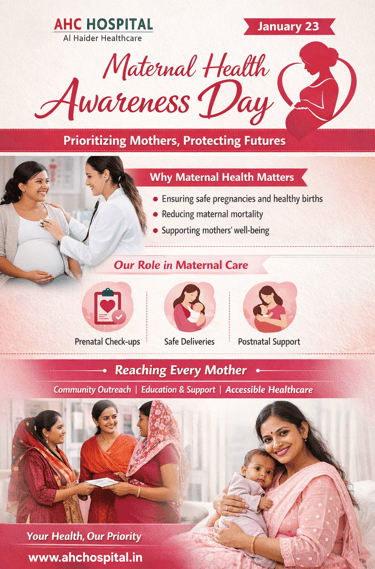
Maternal Health Awareness Day, observed on January 23, is a vital opportunity to highlight the health, wellbeing, and rights of women during pregnancy, childbirth, and the postnatal period. At AHC Hospital (Al Haider Healthcare), maternal health is a core priority, as the health of mothers directly influences newborn survival, child development, and the overall health of families and communities.
This blog aims to educate the public on the importance of maternal health, outline the role of healthcare institutions, and present practical strategies to reach and support the maximum number of mothers, especially in resource‑limited and rural settings.
Importance of Maternal Health
1. Reducing Maternal Mortality and Morbidity
Complications such as severe anemia, pre‑eclampsia, eclampsia, hemorrhage, sepsis, and obstructed labor remain major causes of maternal mortality. Early registration, regular antenatal check‑ups, and institutional deliveries significantly reduce these risks.
2. Ensuring Healthy Newborns
A healthy mother is more likely to deliver a healthy baby. Good maternal nutrition, infection control, and antenatal monitoring help prevent:
Low birth weight
Preterm birth
Birth asphyxia
Neonatal infections
3. Breaking the Cycle of Poor Health
Maternal malnutrition, anemia, and untreated illnesses can have intergenerational effects, leading to stunting, poor immunity, and developmental delays in children.
4. Mental Health and Emotional Wellbeing
Pregnancy and the postpartum period are sensitive phases. Conditions such as antenatal anxiety, postpartum depression, and stress are common but often ignored. Awareness and counseling are essential components of maternal care.
5. Social and Economic Impact
Healthy mothers contribute to stable families and productive communities. Preventing maternal illness reduces healthcare costs, loss of income, and long‑term dependency.
Role of Healthcare Institutions Like AHC Hospital
Healthcare facilities play a critical role in ensuring safe motherhood through comprehensive, continuous, and compassionate care.
1. Antenatal Care (ANC)
Early pregnancy registration
Minimum 4–8 ANC visits
Monitoring blood pressure, weight, hemoglobin, blood sugar
Ultrasound and necessary laboratory investigations
Tetanus/Td vaccination
Iron, calcium, folic acid supplementation
2. Intranatal (Delivery) Care
Promotion of institutional deliveries
Skilled birth attendants
Clean and safe delivery practices
Emergency obstetric care and timely referral
3. Postnatal Care (PNC)
Monitoring mother and newborn for complications
Breastfeeding counseling
Postpartum family planning advice
Screening for postpartum depression
4. Nutrition and Lifestyle Counseling
Balanced diet guidance during pregnancy and lactation
Management of anemia and nutritional deficiencies
Advice on rest, physical activity, and avoidance of harmful substances
5. Health Education and Counseling
Birth preparedness and complication readiness
Danger signs in pregnancy and postpartum period
Importance of spacing between pregnancies
Common Danger Signs Every Mother Should Know
Early recognition saves lives. Mothers and families should seek immediate medical care if there is:
Severe headache or blurred vision
Swelling of face or hands
Heavy vaginal bleeding
Severe abdominal pain
High fever
Reduced or absent fetal movements
Convulsions
Foul‑smelling vaginal discharge
How to Reach and Cover Maximum Mothers
To ensure maternal health services reach every woman, especially the underserved, a multi‑level approach is required.
1. Community Outreach Programs
Regular health camps in villages and slum areas
Antenatal screening camps
Door‑to‑door awareness by health workers
2. Strengthening Frontline Health Workers
Training ASHA, ANM, and Anganwadi workers
Empowering them to identify high‑risk pregnancies early
Encouraging timely referrals to hospitals like AHC Hospital
3. Health Education Through Media
Educational videos and short reels on pregnancy care
Awareness posters in local language
Use of social media platforms for maternal health messaging
4. Involving Family Members
Educating husbands and elders about maternal nutrition and rest
Promoting shared responsibility for maternal health
5. Adolescent and Pre‑Pregnancy Counseling
Addressing anemia and malnutrition in adolescent girls
Counseling on early marriage and early pregnancy risks
Promoting planned and healthy pregnancies
6. Affordable and Accessible Services
Low‑cost or free antenatal check‑ups
Flexible OPD timings
Friendly, respectful maternity care
Government Programs Supporting Maternal Health (India)
Awareness about existing schemes increases utilization:
Janani Suraksha Yojana (JSY) – Promotes institutional delivery
Janani Shishu Suraksha Karyakram (JSSK) – Free delivery and newborn care
Pradhan Mantri Surakshit Matritva Abhiyan (PMSMA) – Free ANC on fixed days
POSHAN Abhiyaan – Nutrition support for mothers and children
AHC Hospital actively supports and guides eligible mothers to benefit from these programs.
Our Commitment at AHC Hospital (Al Haider Healthcare)
At AHC Hospital, we believe that every mother deserves safe, respectful, and quality care. Our commitment includes:
Evidence‑based maternal care
Early identification of high‑risk pregnancies
Compassionate counseling and support
Continuous education for mothers and families
On this Maternal Health Awareness Day, we reaffirm our mission to protect, promote, and improve maternal health—because healthy mothers build healthy families and a healthier future.
Conclusion
Maternal health is not a single‑day concern; it is a lifelong investment. Awareness, early care, community participation, and strong healthcare systems are the pillars of safe motherhood. By working together—healthcare providers, families, and communities—we can ensure that no mother is left behind.
Let us pledge to care for mothers, today and every day.
AHC Hospital – Caring for Mothers, Caring for Life.